

Frequently asked
Why isn't my dough rising?
The most common cause is yeast that's been killed by water that's too hot. Use warm water — about 100°F, which feels neutral-to-slightly-warm against your wrist. If the water feels warm or hot, let it cool. The other common cause is old yeast — if your packet is past its expiration date or has been open in a warm kitchen for months, replace it.
Can I use all-purpose flour instead of bread flour?
Yes. Bread flour produces a chewier crumb because of its higher protein content, but all-purpose works fine. Expect a slightly softer texture and a less open crumb structure. Don't substitute pastry flour or cake flour.
Do I have to use a Dutch oven?
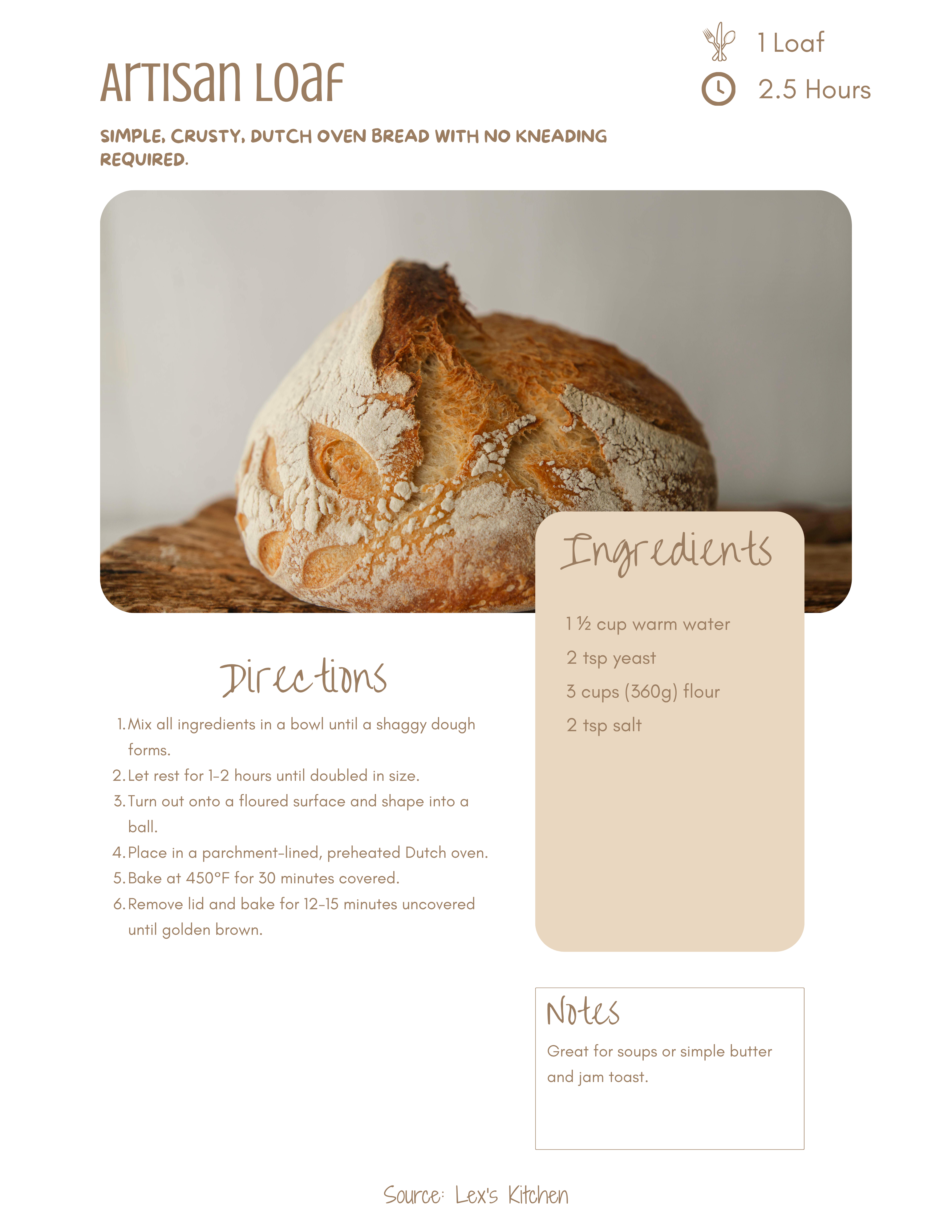
A Dutch oven traps steam during the first half of baking, which is what gives this loaf its crackling crust. You can approximate with a heavy oven-safe pot with a lid, or with a baking stone plus a pan of water on the rack below. Without one of those setups, the crust will be softer but the bread is still good.
How long does this bread keep?
About 2-3 days on the counter wrapped in a clean kitchen towel, cut-side down on a cutting board. Longer if you slice and freeze portions — frozen slices toast back to nearly-fresh quality. Don't refrigerate fresh bread; it goes stale faster in cold air than at room temperature.
Can I double the recipe?
Yes, but bake the loaves separately or in two Dutch ovens. A single Dutch oven holds one loaf's worth of dough without crowding.
What does "shaggy dough" mean?
Just-combined dough that looks rough and uneven, with bits of flour still visible. Not smooth, not kneaded — just everything wet and clumped together. The long rise does the gluten development for you.

